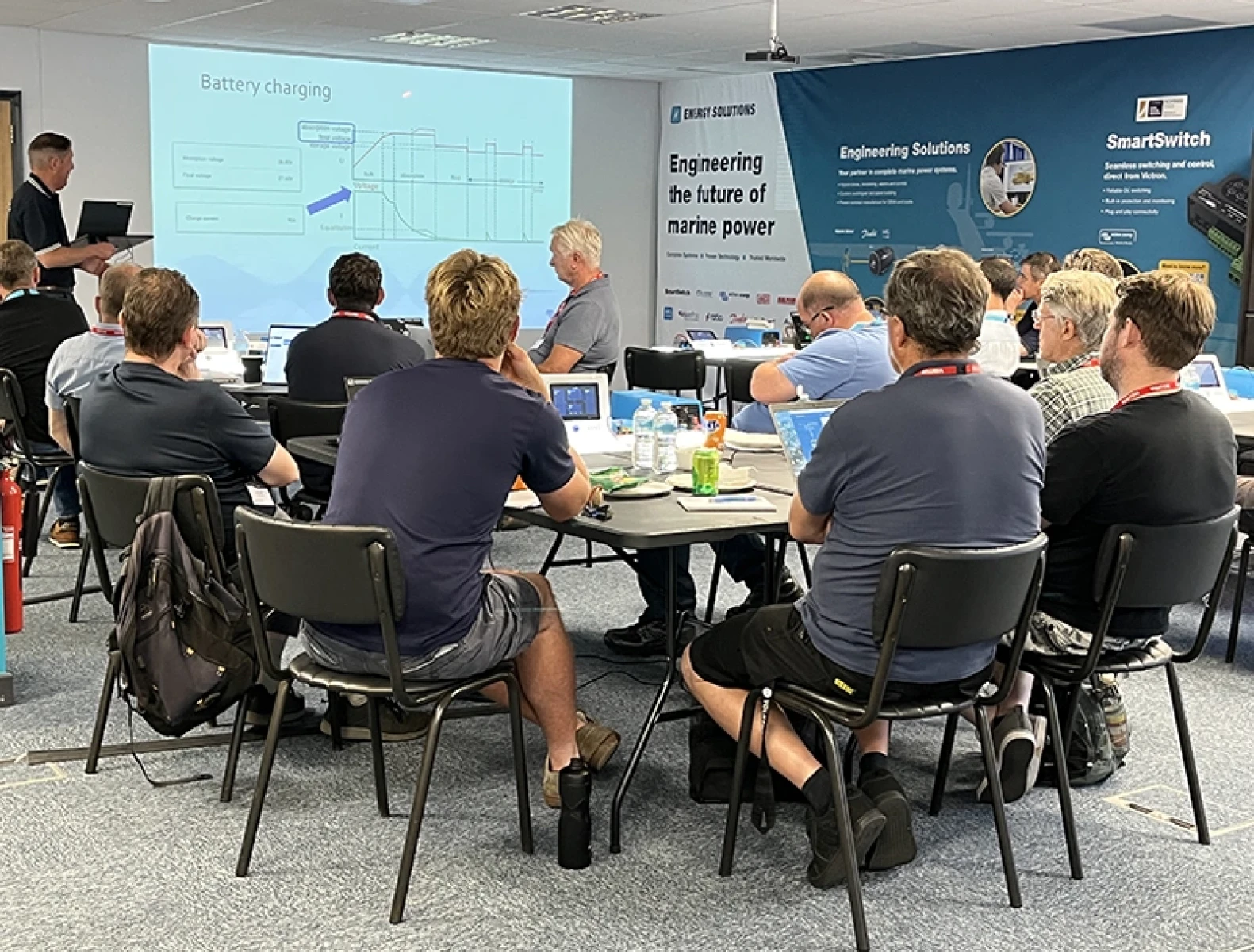
Blog:
Victron Training UK: Why installers and resellers need more than product knowledge

Victron products are well known across marine, vehicle, off-grid and hybrid power markets. That does not mean every Victron system is simple.

For some projects, the job is straightforward. A customer needs a charger, inverter, battery monitor or DC/DC converter and the right product can be specified quickly. But as soon as a system starts combining batteries, inverter/chargers, alternator charging, solar, shore power, monitoring, generator integration or future expansion, the decisions become more connected.
That is where practical Victron training and technical support start to matter.
For installers and resellers, knowing the product range is useful. Knowing how those products behave together in real installations is what protects your reputation.
Because when a system does not perform as expected, the customer rarely blames the spreadsheet, the manual or the supplier they have never spoken to. They call you.
Why Victron training matters for trade customers
Most installers and resellers do not need training because they lack ability. They need it because modern power systems are becoming more complex.
Customers are asking for more from their systems. More battery capacity. More monitoring. More solar. More independence. More automation. More off-grid capability. More comfort on board. More power in vehicles. More visibility from a phone. More backup when things do not go to plan.
The system has to do more but it still has to feel simple for the end user.
That puts pressure on the people designing, selling and installing it.
Good Victron training gives trade customers more confidence before the order is placed, before the system is installed and before the customer starts asking why the thing they bought does not behave like the thing they imagined.
It helps you understand not just what the component does, but where it fits, what it needs around it and what questions should be asked before the specification is finalised.
Product knowledge is useful. System knowledge is better.
There is a big difference between recognising a Victron product and understanding the system it belongs in.
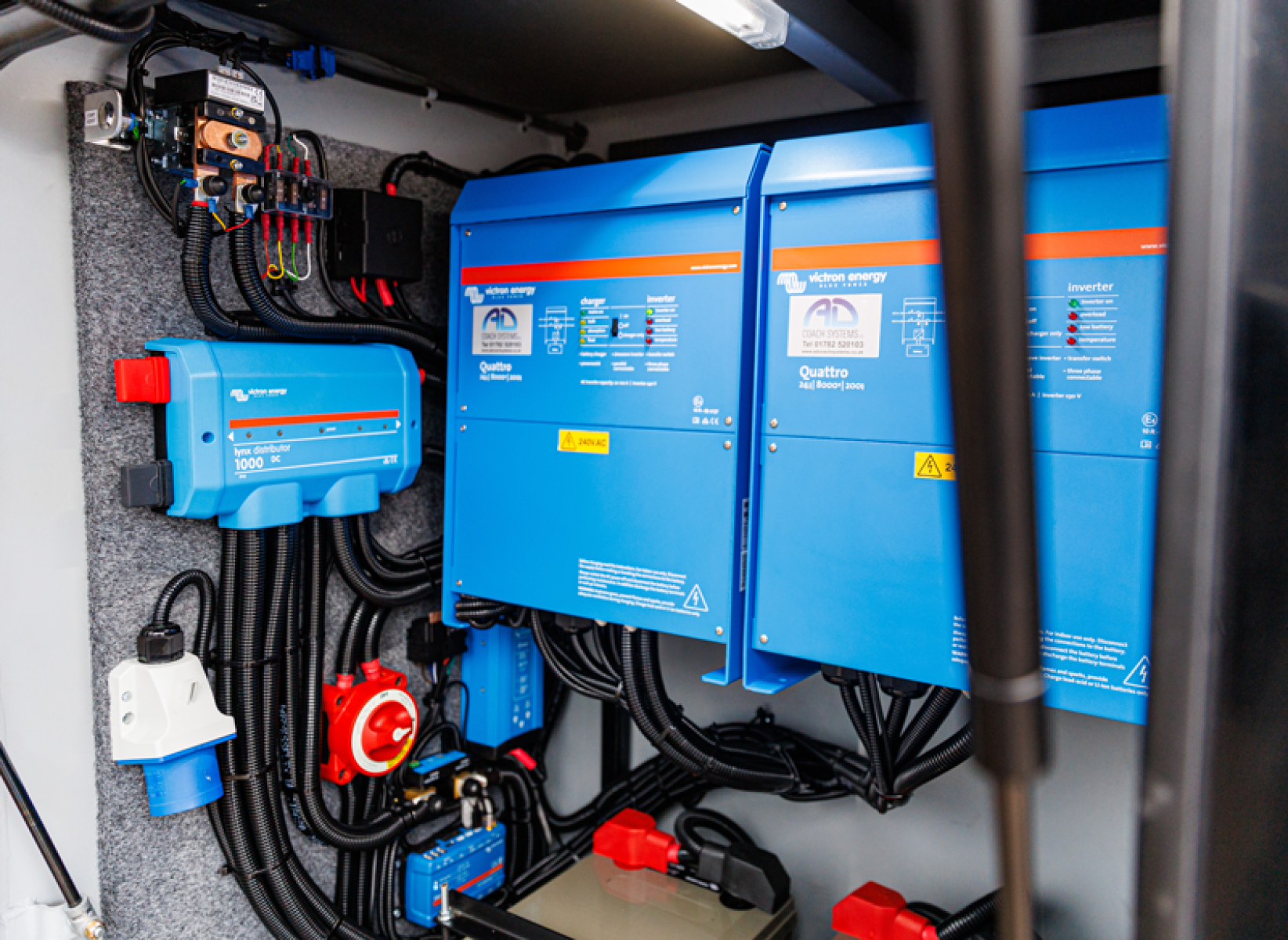
An inverter/charger is not just an inverter/charger once it becomes part of a wider installation. Successful operation depends on battery capacity, load demand, charge sources, cable sizing, settings, monitoring, customer behaviour and what the system may need to do later.
The same is true for solar charge controllers, battery monitors, DC/DC converters and GX monitoring products. They are not isolated boxes. They are part of a wider energy system.
That is why training needs to go beyond product features.
A good trade training session should help installers and resellers understand how systems are put together in real life. It should cover the questions that make or break a project: what is the customer trying to power, how often will it be used, how quickly does the system need to recharge, what are the critical loads, what might be added later and how will the customer know what is happening?
The best training helps you think like a system designer, not just a parts picker.
The real risk is not the product. It is the specification.
Victron has a strong product ecosystem. That is one of the reasons installers and resellers use it across marine, vehicle and off-grid applications.
But even good equipment can underperform if the system has been poorly specified.
A battery bank may be too small for the loads. An inverter may not be right for the expected peak. Charging sources may not be configured to behave as the customer expects, or may require careful coordination to achieve the desired charging behaviour. Monitoring may be missing, which makes troubleshooting harder later. A system may work perfectly on day one but leave no sensible route for future expansion.
None of these issues are unusual. They are exactly the sort of things that happen when a project is quoted too quickly or when the customer starts with “I just need this one part” when, really, they need a more joined-up solution.
Training helps trade partners spot those risks earlier.
That means fewer awkward callbacks, fewer rushed fixes and fewer moments where everyone stands around the system having a deeply meaningful silence.
We have all been there. Nobody enjoys it.
What should Victron installer training cover?
At a basic level, training should help installers understand product selection, battery and inverter matching, charging sources, monitoring, installation considerations and common commissioning issues.
But the real value comes from application-based training.
A marine system does not behave like a camper conversion. A service vehicle is not the same as an off-grid home. A lithium battery system has different considerations from a lead-acid setup. A system with solar, alternator charging and shore power needs to be thought through properly.
Training should help installers understand those differences, because customers are not buying generic systems. They are buying power that has to work in a specific environment.
For marine electricians, that might mean understanding shore power, inverter/charger behaviour, battery monitoring and hybrid onboard power. Energy Solutions’ marine page confirms the business stocks the full Victron range and provides technical advice and support before and after sale.
For vehicle converters, the questions may be around onboard tools, comfort systems, solar, monitoring, size limitations and reliable independent onboard power. Energy Solutions’ vehicle page positions the business around independent power systems for vehicles, including technical support, schematics and wiring diagrams.
The product range may overlap but the installation context changes everything.
What should Victron reseller training cover?
Resellers need training for a slightly different reason.
They may not be installing the system but they are often the first person a customer asks for advice. That means they need enough understanding to guide the customer properly, avoid poor product matching and know when a project needs more technical support.
Good reseller training should help teams recognise common buying scenarios and ask better questions.
- Is the customer replacing a single component, or building a new system?
- Are they trying to charge from solar, alternator, shore power or generator?
- Are they using lithium batteries?
- Do they need monitoring?
- Are they planning to expand later?
- Do they understand what size inverter they actually need, or have they guessed based on one appliance?
Those questions matter because a reseller can either sell a product or steer the customer toward a better system decision.
That does not mean turning every reseller into an engineer. It means giving them enough knowledge to avoid obvious traps, spot better opportunities and know when to bring in technical backup.
That is good customer service. It is also good business.
Training helps reduce callbacks and support headaches.
Callbacks are expensive
Not just in fuel, labour and time, although those are painful enough. They also chip away at trust. A customer who loses confidence in a system often loses confidence in the person who supplied or installed it, even if the issue started somewhere else.
Practical training helps reduce that risk because it improves decisions earlier in the process.
If an installer understands the likely load profile, battery limits, charging behaviour and monitoring requirements, they are more likely to specify the right equipment. If a reseller understands the difference between a simple component sale and a system design conversation, they are less likely to sell a part into a project that needed more thought.
That is the commercial value of training.
It is not a classroom exercise. It is reputation protection.
Training should be backed by technical support.
Training is important but it should not leave trade customers on their own afterwards.
Installers and resellers still need somewhere to go when the project gets more complex, when a specification needs sense-checking, or when a customer asks a question that is not answered by a product page.
Energy Solutions’ technical support article explains the appointment of Phil Smith as Technical Sales Manager, with a focus on supporting trade partners with Victron system design, specification and technical detail.
Training gives trade customers a stronger foundation. Technical support helps when the real-world project brings its usual collection of surprises. The two should work together.
A supplier who offers both becomes far more valuable than a supplier who can only tell you whether a box is in stock.
Why Victron training helps installers win better work
The more confident you are with system design, the easier it becomes to move into higher-value projects.
Simple component supply will always have a place. But the stronger commercial opportunity is often in the more sophisticated systems: marine electrics, off-grid homes, mobile work vehicles, specialist conversions, hybrid power, remote monitoring and lithium battery upgrades.
Customers in those areas need more than a shopping basket. They need guidance.
If you can explain why a certain system is right, what it will do, how it will be monitored and how it can expand later, you are no longer competing only on price. You are selling confidence.
That is powerful for installers and also resellers.
Training gives your team the language, knowledge and practical understanding to have better conversations with customers. And better conversations usually lead to better projects.
Why training supports resellers as well as installers
Resellers can sometimes be left out of training conversations, as though only installers need technical knowledge.
That is a missed opportunity.
Resellers are often the people who shape the first stage of the customer journey. If they ask the right questions, the project starts well. If they only match a product name to a customer request, the customer may walk away with something that is technically correct but commercially wrong for the wider system.
A trained reseller can identify when a customer needs a battery monitor, a different charger, a GX device, a future-proofed inverter/charger or technical advice before buying.
That makes the reseller more useful and it also makes the customer more likely to come back.
What practical Victron training could include.
For installers and resellers, the most useful training is built around the decisions they make every day.
That could include:
- How to understand customer loads before specifying equipment.
- Choosing the right inverter or inverter/charger.
- Matching batteries, chargers and charge sources.
- Lithium battery considerations.
- Solar charging and alternator charging basics.
- Victron monitoring and remote visibility.
- Common commissioning checks.
- Typical mistakes that lead to callbacks.
- When to use technical support before ordering.
- How to explain system options clearly to customers.
This type of training is not about turning every trade customer into a Victron encyclopaedia. It is about giving people enough practical confidence to specify better, sell better and install better.
Learning beyond the product catalogue
Many installers build their knowledge through Victron Professional, Victron Energy's online learning platform. It provides a strong foundation in the Victron ecosystem, while practical training and technical support help bridge the gap between theory and real-world installations. Combining manufacturer resources with support from an experienced Victron partner gives installers and resellers greater confidence when specifying, commissioning and supporting complete power systems.
Why Energy Solutions is well placed to support Victron training
Energy Solutions has a long-standing Victron relationship and supports trade customers across marine, vehicle, off-grid and hybrid power applications.
As a Victron partner since 2000, Energy Solutions combines more than 25 years of experience with in-house engineering, system design support, technical sales, repair capability and practical expertise across marine, vehicle, off-grid and hybrid power applications.
We don’t just supply products from a catalogue. The team works with power systems across marine, vehicles, off-grid applications and bespoke engineering. That gives installers and resellers access to practical support grounded in real-world system experience.
For trade partners, that means the conversation can go beyond “which product do you want?” and move into “what are you trying to build, and what does the system need to do?”
How to get started with Victron trade support
If you are an installer, reseller or system integrator working with Victron products, the best starting point is to build a trade relationship with Energy Solutions.
You can apply for an Energy Solutions trade account online. Applications are reviewed, company checks are carried out and successful applicants are notified by email within five business days.
Once your trade account is in place, you can browse Victron products, access support and speak to the team about specification, system design and technical questions.
For training specifically, the sensible route for now is to speak to the Energy Solutions team about current support options and upcoming opportunities.
Training is not a nice extra. It is how trade partners grow.
Victron systems can open the door to better projects, but only if installers and resellers feel confident specifying, selling and supporting them.
That confidence does not come from product lists alone.
It comes from practical training, clear technical support and a trade partner who understands the systems behind the sale.
For installers, that means fewer mistakes, better installations and fewer callbacks.
For resellers, it means better customer conversations, stronger advice and more valuable repeat business.
For your customers, it means systems that work as expected.
And that is the point. Because good power systems should not feel like guesswork. They should be specified properly, installed confidently and supported by people who know what they are doing.

Energy Solutions designs, builds and supports intelligent energy systems for marine, vehicle, off-grid and specialist power applications. As a long-standing Victron distributor, the team supports installers, resellers and system integrators with Victron product supply, practical technical advice, system design guidance, training support and after-sales backup.
Victron Training UK FAQs for Installers and Resellers
What is Victron training?
Victron training helps installers, resellers and system integrators understand how Victron products work individually and as part of wider power systems. Good training should cover product selection, system design, installation considerations, monitoring, troubleshooting and real-world application advice.
Who needs Victron training?
Victron training is useful for marine electricians, off-grid installers, vehicle converters, resellers, renewable energy specialists, system integrators and anyone specifying or supporting Victron-based power systems.
Why do installers need Victron training?
Installers need training because many Victron systems involve several components working together. Understanding battery capacity, inverter sizing, charging sources, monitoring and settings helps reduce errors, callbacks and commissioning issues.
Why do resellers need Victron training?
Resellers often guide customers at the start of the buying process. Training helps them ask better questions, avoid poor product matching and know when a customer needs technical support before buying.
Does Victron training help reduce callbacks?
Yes. Training can reduce callbacks by improving specification, product selection and installation decisions before the system is fitted. Fewer mistakes at the start usually mean fewer problems later.
What should Victron installer training cover?
Installer training should cover load assessment, battery and inverter matching, lithium battery considerations, solar and alternator charging, GX monitoring, system settings, installation checks and common troubleshooting issues.
What should Victron reseller training cover?
Reseller training should cover common customer scenarios, product selection, system compatibility, when to recommend monitoring, when to flag technical support and how to explain options clearly to customers.
Is Victron training only for advanced installers?
No. Victron training can help both newer and experienced trade customers. For newer installers, it builds confidence. For experienced installers, it supports more complex systems and higher-value projects.
How does training help system designers?
Training helps system designers think about the whole installation rather than isolated components. That includes power demand, battery storage, charge sources, monitoring, future expansion and customer behaviour.
Can Energy Solutions support Victron system design?
Yes. Energy Solutions supports trade partners with Victron system design, specification and technical detail. Its technical support article explains that the team helps installers, integrators and resellers with practical support for real-world systems.
Does Energy Solutions offer Victron technical support?
Yes. Energy Solutions provides Victron technical advice and support pre- and post-sale, with experience across marine, vehicle, off-grid and hybrid power applications.
Does Energy Solutions offer a Victron trade account?
Yes. New trade customers can apply for an Energy Solutions trade account online. Applications are reviewed and successful applicants are notified by email within five business days.
Where can I find Victron products from Energy Solutions?
You can browse Victron products through the Energy Solutions product search filtered by brand.
Does Energy Solutions support Victron repairs?
Yes. Energy Solutions’ Victron page states that the business is the UK’s only in-house Victron service and repair centre, providing lifecycle support from diagnostics and maintenance to repairs.
Sign up to our mailing list
Keep up to date with the latest news and offers.

|
Thank you for Signing Up |


Submitting your details indicates that you have read and agree to our privacy policy and cookie policy. You can unsubscribe from our emails by using the link at the bottom of all emails we send.