Blog:
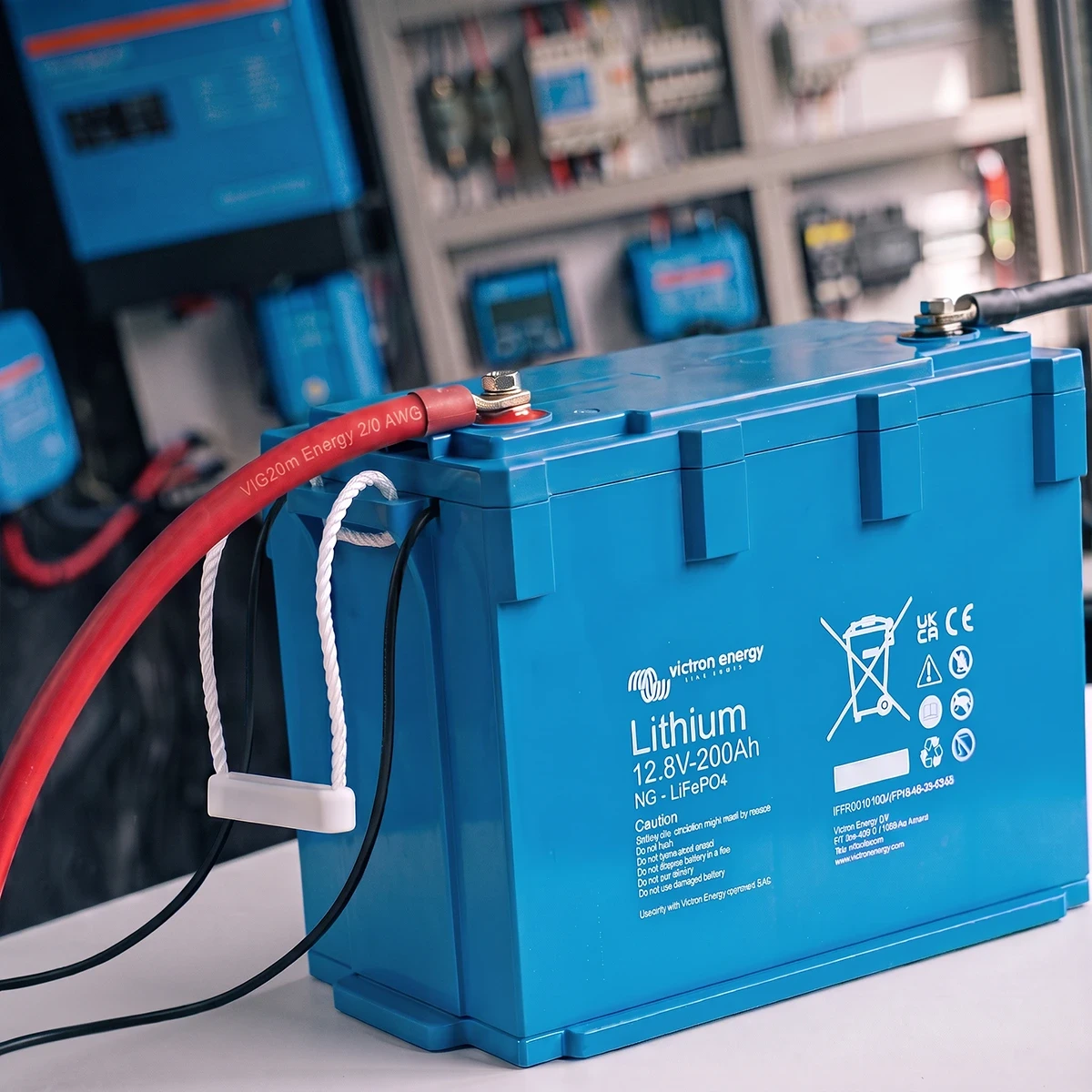
Victron battery systems for marine, vehicle and off-grid applications
Customers never say: “I need a correctly specified Victron lithium battery system with suitable battery management, charging sources, monitoring and future expansion capacity.”
But they do say:
“I want to run more equipment.”
“I want the generator on less.”
“I need more power in the van.”
“I want to stay off-grid longer.”
“I’ve added solar.”
“I need the system to be lighter.”
“I want to know what’s happening from my phone.”
“I don’t want the customer calling me in three months because the batteries aren’t doing what they expected.”
For installers, resellers and system integrators, those customer requests all point toward the same thing: the battery system needs to be specified properly from the start.
Victron battery systems are used across marine, vehicle and off-grid applications because they sit within a wider ecosystem of batteries, chargers, inverter/chargers, solar controllers, monitoring products and supporting components.
But the right set-up is not just about choosing a battery with enough capacity. It is about understanding what the system needs to do, how it will be charged, how it will be protected and how the customer will use it in the real world.

Why Victron battery systems are not just about battery size
Battery capacity is important, of course. If the system cannot store enough energy to support the loads, the customer will find out quickly. Usually at the least convenient possible moment.
A good battery system has to match the load profile, the charging sources, the available space, the installation environment and the customer’s expectations. It also needs the right supporting components around it, including battery management, charging, monitoring, protection and power conversion.
This is where many projects become more complicated than they first appear. A customer may think they are simply upgrading batteries but the moment they add lithium, solar, inverter capacity, alternator charging or remote monitoring, the system design needs more thought.
For trade customers, that means the supplier’s role becomes more important. You need more than availability. You need advice that helps you avoid undersizing, oversizing, poor component matching and the kind of “it technically works, but…” outcome nobody wants to own.
The real customer problem: more power, less hassle
Customers are not emotionally attached to batteries, they just care about what the battery system allows them to do.
In marine applications, that might mean running more onboard systems without relying on the generator as much. In vehicles, it might mean powering tools, equipment, comfort systems or communications away from a fixed supply. In off-grid applications, it might mean longer periods of independence, better use of solar or more reliable backup power.
The customer wants the outcome, not the product category.
That is why installers and resellers need to ask questions before recommending a system. What needs to run? For how long? How often? What happens if the system runs low? How will the batteries recharge? Will solar be included? Is shore power or mains charging available? Is the system expected to expand later?
The better the questions, the better the system.
And the fewer awkward callbacks later.
Victron battery systems for marine applications
Marine battery systems have to work in demanding environments.
Space can be limited. Loads can be varied. Customers often want more comfort, more equipment and more quiet time without running engines or generators. On commercial vessels, the pressure may be around reliability, operational efficiency and reducing generator runtime. On leisure craft, it may be about onboard comfort, convenience and confidence when away from shore power.
A marine Victron battery system may need to work alongside inverter/chargers, shore power, alternator charging, solar input, generators, battery monitoring and wider onboard electrical systems.
That means specification matters.
The system needs enough stored energy for the customer’s real use but it also needs the right charging strategy. A larger battery bank is not much use if the system cannot recharge properly. A powerful inverter may disappoint if the battery capacity and discharge capability are not suitable. Monitoring becomes important because the customer needs to understand what is happening before power becomes a problem.
Energy Solutions has long-standing marine expertise, across complete electrical system design, power electronics, batteries and hybrid onboard power systems. We stock the entire Victron range and offer technical advice and support before and after sale.
For marine installers and resellers, that kind of application knowledge is useful because the battery system is rarely isolated. It is part of a wider onboard power environment.
Victron battery systems for vehicle applications
Vehicle power systems have changed a lot.
Service vehicles, work vans, emergency support vehicles, recreational vehicles and specialist conversions all need more electrical capability than they used to. Customers want to charge tools, run appliances, power communications, operate equipment, support comfort systems and stay independent when they are away from mains supply.
That is a very different challenge from simply fitting a battery.
Vehicle systems have practical constraints including space, weight, heat and vibration. Charging from the alternator, solar or mains supply needs to be considered properly. The customer may also need monitoring, so they can understand the system without needing to become an electrical engineer.
Vehicle builders and owners increasingly need power and monitoring systems with reliable but sophisticated capabilities. Energy Solutions can provide standard kits with wiring diagrams and installation information, or bespoke system design and component supply for specific projects.
For installers and resellers, vehicle battery systems are a strong opportunity because customers often know they need more power but not exactly how to specify it. A trade partner who can help with schematics, wiring diagrams and technical support makes that conversation much easier.
Victron battery systems for off-grid applications
Off-grid battery systems are often expected to do a lot of heavy lifting.
The customer may be powering a remote home, a rural business, a temporary site, a cabin, a telecoms installation or a commercial system where a grid connection is unavailable or limited. They may have solar. They may have a generator. They may need the battery system to support essential loads quietly overnight.
The challenge is that off-grid energy use is not always predictable.
Weather affects solar input. Seasonal demand changes. Customers add loads. Generators may be used as backup or for battery charging. Some loads are essential, while others are flexible. A system that works well in summer may be under pressure in winter if it has not been specified properly.
That is why off-grid battery systems need to be designed around usage, not guesswork.
The questions are simple but important. What are the daily loads? What is the peak demand? How long should the system run without generator support? What renewable input is available? What happens during poor weather? What monitoring does the customer need? How easily can the system be expanded?
For installers and resellers working in this space, Victron’s wider product ecosystem can be valuable because battery storage, solar, inverter/chargers, monitoring and generator support often need to work together.
Why lithium changes the conversation
Lithium batteries have changed what customers expect from mobile and off-grid power.
They can offer more usable power from a smaller footprint, accept higher charge rates and reduce weight compared with traditional battery technologies.
For installers and resellers, that creates opportunity. Customers are often willing to invest in lithium because the benefits are easier to understand: more usable power, less space taken up, better performance and fewer compromises.
But lithium also raises the importance of correct system design.
The battery system needs the right management, protection, charging profile and supporting components. It is not a like-for-like swap in every installation. If the surrounding system is not right, the customer may not get the performance they expect.
That is why trade support is so valuable here. A good supplier helps you think through the complete system, not just the battery part number.
Battery management is not optional background detail
Battery management can be easy to overlook in customer conversations because it is not always the exciting part.
A Battery Management System helps protect and manage lithium battery performance. It monitors and controls the battery system, supports safe operation and helps the batteries communicate properly with the rest of the installation.
Victron Battery Management Systems are essential for protecting and optimising lithium battery performance, including safe operation, balanced charging and communication between system components.
The battery system is not just the visible storage capacity. It also needs the controls and safeguards that help it work reliably. When a customer sees only the headline battery price, they may not immediately understand why supporting components matter.
Charging sources need to be thought through early
A battery system is only as good as the way it is charged.
Marine systems may charge from shore power, alternators, solar and generators. Vehicle systems may use alternator charging, solar or mains hook-up. Off-grid systems may rely heavily on solar, generator input or a combination of sources.
If charging is not considered properly, customers can end up with a system that stores plenty of energy but takes too long to recover, or one that performs well in one season but struggles in another.
This is where Victron’s wider product ecosystem is useful. Inverter/chargers, solar charge controllers, DC/DC converters, battery monitors and control products can all play a role in making the system practical.
For trade customers, the important thing is to avoid treating battery capacity and charging separately. They belong in the same conversation.
What is being used?
How quickly does it need to recharge?
What charging sources are available?
Will the customer understand the limitations?
Does the system need to prioritise solar, shore power, alternator charging or generator input?
These are the questions that stop a battery upgrade becoming a support issue later.
Monitoring helps customers understand what they have bought
A battery system without good monitoring can quickly become a guessing game.
The customer wants to know how much power is available, how much is being used and whether the system is behaving as expected. Installers and resellers want that visibility too, especially if they are supporting the system after handover.
Victron control and monitoring products give users visibility and management of the energy system, including configuration, real-time performance tracking, optimisation and diagnostics.
Monitoring helps move that conversation from guesswork to evidence. It also helps customers feel more confident, which reduces the chance of panic when something looks unfamiliar.
And less panic is always good for business.
Why resellers should ask more than “which battery?”
For resellers, battery enquiries can look deceptively simple.
A customer asks for a Victron battery. You can sell them one. Job done.
Except it may not be done.
The customer may be trying to solve a wider system problem. They may need a battery, but they may also need a charger, BMS, monitor, inverter/charger, solar controller or technical advice before the order is placed.
That does not mean every enquiry needs to become complicated. It means resellers should know when to ask a few extra questions.
What is the application?
What is already installed?
Is the customer upgrading from lead-acid?
Are they adding solar?
Do they need AC power?
How will the batteries be charged?
Will the system need monitoring?
Is this for marine, vehicle or off-grid use?
Those questions help protect the customer and the reseller.
They also create better commercial opportunities, because a well-advised customer is more likely to buy the complete system they actually need.
Why installers should think beyond the first installation
Installers are often focused on getting the current job delivered, which is understandable. Deadlines, customer expectations and the small matter of physically fitting the system all demand attention.
But battery systems often evolve.
Customers add more equipment. Vehicles get repurposed. Boats gain more onboard comforts. Off-grid users decide they want longer generator-free periods. Solar gets added later. Monitoring expectations increase.
If the original system has no room to grow, the installer may be the one asked to fix it.
That is why future expansion should be part of the early conversation. It may affect battery capacity, inverter sizing, charging strategy, monitoring and the choice of supporting components.
A slightly more considered specification at the start can save a great deal of rework later.
The phrase “future-proofing” gets overused, but the principle is sound: do not design a system so tightly around today’s minimum requirement that tomorrow’s very predictable upgrade becomes a headache.
Why Energy Solutions is a strong Victron battery systems partner
Energy Solutions supports trade customers across marine, vehicle and off-grid sectors, supplying a comprehensive range of Victron products with a strong focus on battery systems, including NG and SuperPack ranges.
We have industry-leading stock availability, next-day delivery, hands-on technical support, system design help, battery selection, configuration, troubleshooting, training sessions and over 25 years of Victron expertise.
For installers and resellers, that combination is important.
You can source Victron batteries and supporting components, but you can also access the technical advice needed to specify systems properly. That is the difference between selling a battery and supporting a power solution.
Energy Solutions’ experience across marine, vehicle, off-grid and bespoke power applications means the team understands the environments where these systems are used. That makes the advice more practical and more useful for trade customers trying to deliver reliable systems in the real world.
How to get started with Victron battery systems
If you are an installer, reseller or system integrator working with Victron battery systems, the best starting point is to build a trade relationship with Energy Solutions.
You can apply for an Energy Solutions trade account online. Applications are reviewed, company checks are carried out and successful applicants are notified by email within five business days.
Once your trade account is in place, you can browse Victron products, access support and speak to the team about battery selection, system design, specification and technical questions.
That is especially useful if you are quoting more complex marine, vehicle or off-grid systems where the battery choice needs to work with the wider installation.
Better battery systems start with better questions
Victron battery systems can help customers get more power, longer runtime, better monitoring, lower generator use and more confidence in marine, vehicle and off-grid applications.
But the best results do not come from choosing a battery in isolation.
They come from understanding the job the system needs to do, the environment it needs to work in and the way the customer will actually use it.
That is where installers and resellers add real value.
And it is where the right trade partner makes a difference too.
With the right Victron products, practical technical support and a clear system design conversation, you can help customers move beyond “I need a bigger battery” and towards a power system that performs properly from day one.

Energy Solutions designs, builds and supports intelligent energy systems for marine, vehicle, off-grid and specialist power applications. As a long-standing Victron distributor, the team supports installers, resellers and system integrators with Victron battery systems, product supply, practical technical advice, system design guidance, training support and after-sales backup.
Victron Battery Systems FAQs for Installers and Resellers
What are Victron battery systems used for?
Victron battery systems are used across marine, vehicle, off-grid and hybrid power applications. They help store energy, support onboard or remote loads, reduce generator reliance and work alongside chargers, inverter/chargers, solar controllers, monitoring and battery management systems.
Are Victron batteries suitable for marine applications?
Yes. Victron batteries are used in marine power systems where customers need reliable onboard energy storage for appliances, tools, navigation equipment, comfort systems and generator-free operation.
Are Victron batteries suitable for vehicle power systems?
Yes. Victron batteries are often used in work vehicles, service vehicles, recreational vehicles and specialist conversions where customers need independent power away from mains supply.
Are Victron batteries suitable for off-grid systems?
Yes. Victron batteries can be used in off-grid systems where stored energy is needed to support loads without relying on a mains grid connection. They are often used alongside solar, inverter/chargers, generators and monitoring.
What is the difference between choosing a battery and designing a battery system?
Choosing a battery is only one part of the job. Designing a battery system means considering loads, charging sources, battery management, monitoring, protection, installation environment and future expansion.
What should installers ask before specifying a Victron battery system?
Installers should ask what the customer needs to power, how long the system needs to run, how it will be charged, whether solar or generator input is involved, what space is available, what monitoring is required and whether future expansion is likely.
What should resellers ask before selling Victron batteries?
Resellers should ask about the application, existing system, battery type, charging sources, expected loads, monitoring requirements and whether the customer is upgrading or building a new system.
Why is a BMS important in a Victron lithium battery system?
A Battery Management System helps protect and manage lithium battery performance. It supports safe operation, balanced charging and communication between system components.
Can Victron battery systems work with solar?
Yes. Victron battery systems can work with solar charge controllers and solar integration components, allowing renewable energy to charge the battery bank where site conditions allow.
Can Victron battery systems reduce generator runtime?
Yes, in suitable applications. By storing energy and supporting loads from the battery bank, a well-designed battery system can reduce how often a generator needs to run.
Do Victron battery systems need monitoring?
Monitoring is highly recommended in many applications because it helps customers and installers understand battery state, energy use, charging performance and system behaviour.
Are lithium batteries always the right choice?
Not always. Lithium batteries offer strong performance benefits, but the right battery choice depends on budget, application, charging sources, available space, system requirements and customer expectations.
Can Energy Solutions help specify Victron battery systems?
Yes. Energy Solutions supports trade partners with Victron system design, battery selection, configuration and troubleshooting, backed by more than 25 years of Victron expertise.
Does Energy Solutions supply Victron NG and SuperPack batteries?
Energy Solutions’ Victron page says the business supplies Victron battery systems including NG and SuperPack ranges.
How do I apply for an Energy Solutions trade account?
You can apply for an Energy Solutions trade account online. Applications are reviewed, company checks are carried out and successful applicants are notified by email within five business days.
Sign up to our mailing list
Keep up to date with the latest news and offers.

|
Thank you for Signing Up |


Submitting your details indicates that you have read and agree to our privacy policy and cookie policy. You can unsubscribe from our emails by using the link at the bottom of all emails we send.