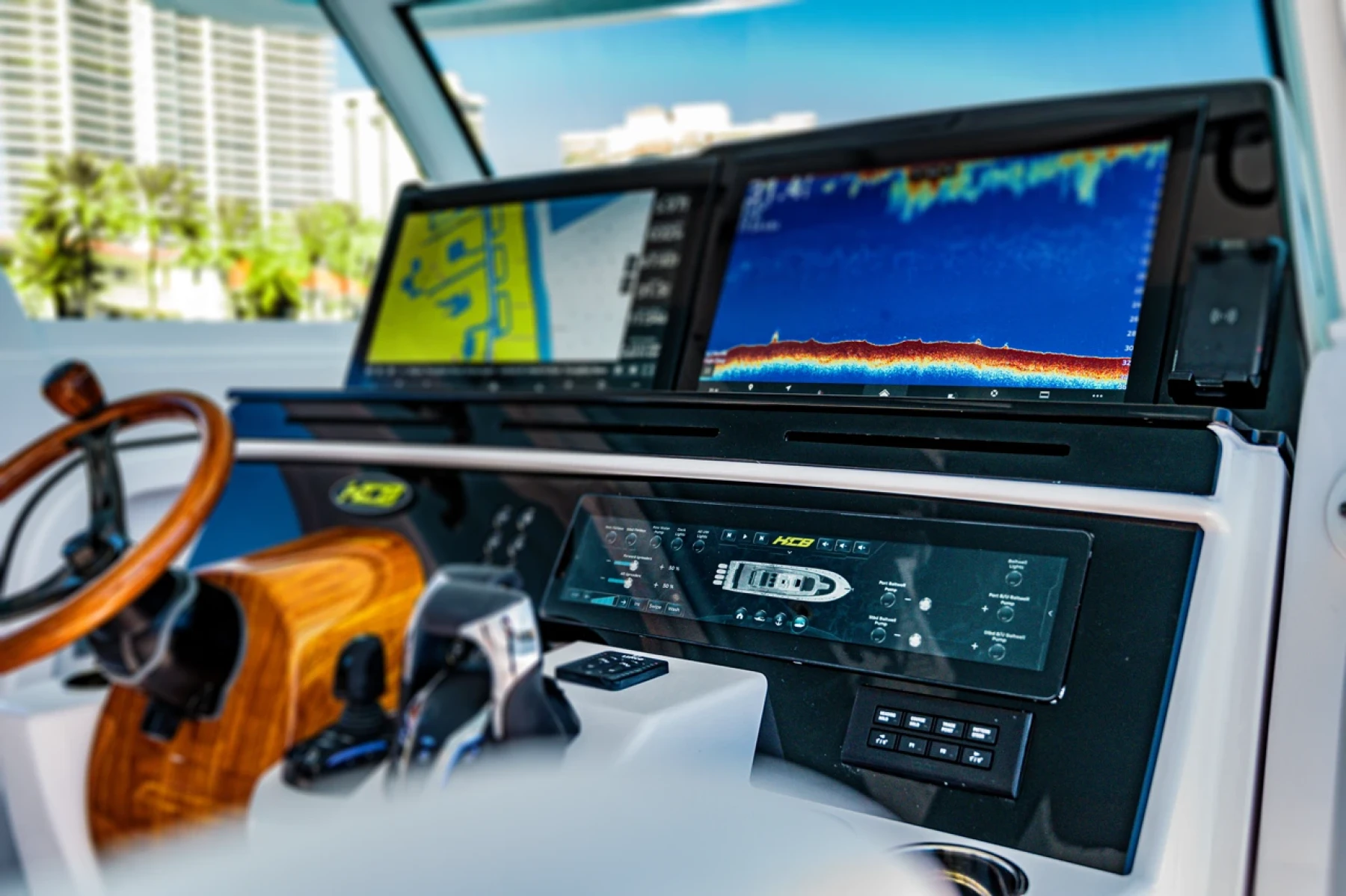
Image courtesy of HCB Yachts.
Blog:
Beyond data: smarter monitoring for modern vessels
Modern vessels generate an extraordinary amount of data. Engines, batteries, tanks, generators, shore power, charging systems, navigation equipment, HVAC, solar, digital switching and alarms can all be producing information at the same time.
In theory, that should give owners, operators and engineers a clearer understanding of what is happening onboard. In practice, it can have the opposite effect.
The problem is no longer getting access to data. It is deciding which information matters, bringing it together from different systems and presenting it in a way that helps someone make a better decision.
A vessel might have one display for navigation, another for the engines, another for battery information, a separate interface for switching and an app showing something else entirely. Every component may be working properly, but the person operating the vessel is still moving between systems to work out what the vessel is telling them.
As electrical and electronic systems become more sophisticated, simply adding more data points or another screen is not enough. Better vessel monitoring has to make that complexity easier to understand.

From data to useful information
There is a significant difference between displaying a number and explaining what that number means.
A battery monitor might show a state of charge of 65%. That is useful data, but by itself it does not answer the questions the owner is likely to have. How long will that energy last at the present load? Is the battery discharging at the rate we would normally expect? Is it charging properly? Has something changed compared with yesterday?
Once information from different parts of the system is brought together, those questions become much easier to answer.
Instead of looking at battery state of charge in isolation, we can also consider current electrical loads, shore power status, solar contribution, alternator charging, generator operation, battery temperature and consumption over time. We are no longer simply monitoring a battery. We are beginning to understand how the vessel's energy system is behaving.
That is the important progression in smarter monitoring. Data becomes information when context is added. Information becomes insight when we can recognise what is normal, what has changed and why it may matter. From there, the operator or system can decide whether anything needs to happen.
Sometimes the right response is simply to provide clearer information. In other situations it may be appropriate to issue an alert, shed a non-essential load or, where the system has been designed and configured to do so, request the generator to start.
The objective is not to automate everything that happens onboard. It is to make sure that the right information reaches the right person, in a form they can use.
The dashboard is not the solution on its own
There is an understandable temptation to deal with increasingly sophisticated vessel systems by putting more information onto a dashboard.
The difficulty is that a screen containing twenty gauges is not necessarily more useful than one containing five. If the operator has to interpret a wall of numbers before understanding whether there is a problem, the technology has not really made their job any easier.
The better question is what the person using the vessel needs to know at that moment.
Modern cars are a useful comparison. There are thousands of parameters available within the vehicle, but the driver is not expected to monitor all of them. The systems behind the dashboard deal with the complexity and present the information that matters. If something requires attention, the driver is told.
Marine monitoring should increasingly work on the same principle. The engineering behind the interface can be extremely sophisticated, but that does not mean the user experience should be.
The owner may need a simple, clear overview of the vessel. An engineer diagnosing a fault may need access to significantly more detailed information. A properly designed monitoring system should be able to serve both requirements without forcing every user to work through the same level of technical detail.
Bringing vessel systems together
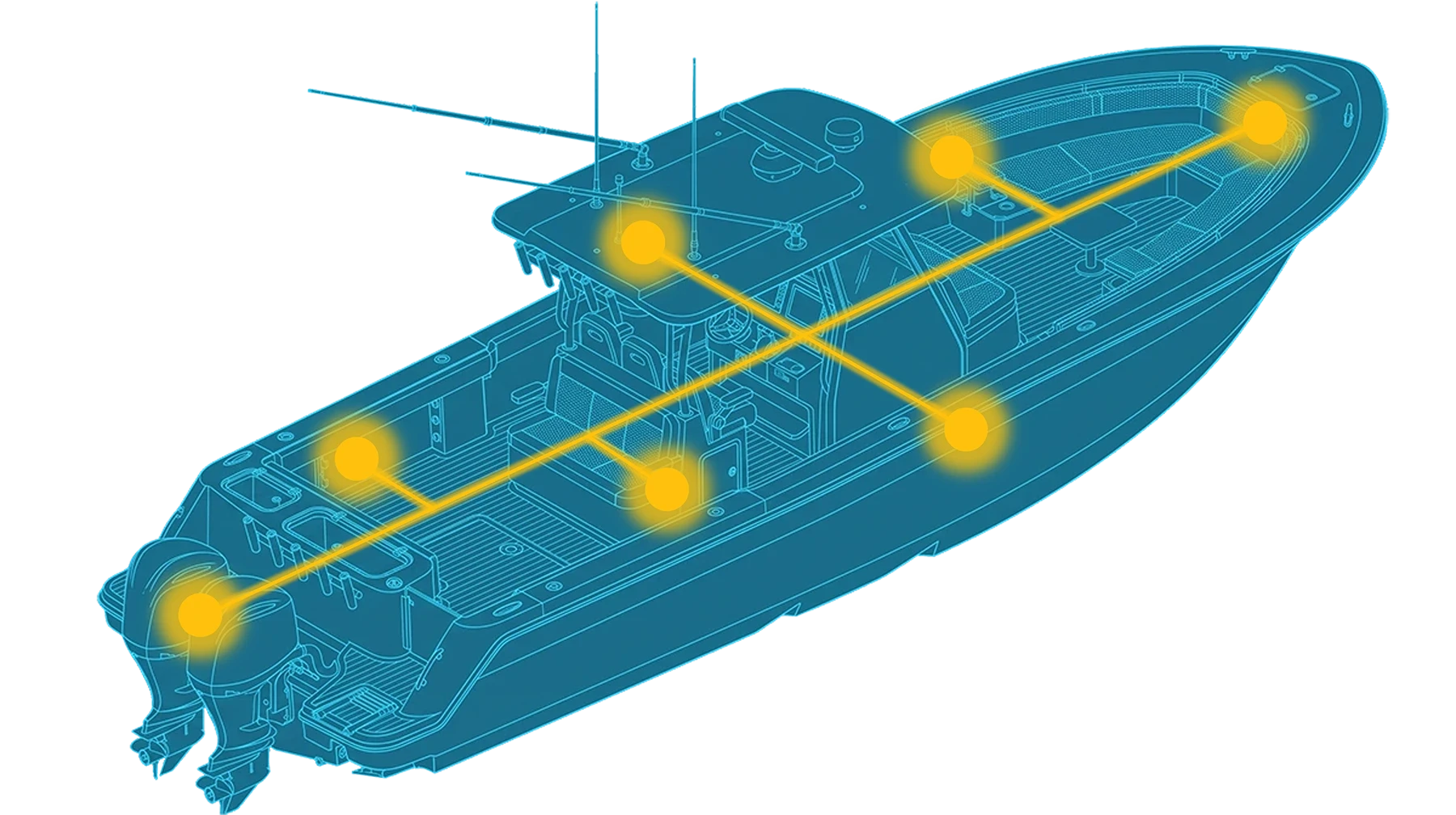
Standards such as NMEA2000 have already created much greater opportunities for information to move between marine equipment. Alongside NMEA data, a modern vessel may include CAN-based systems, battery management systems, digital switching, power electronics, tank monitoring and other connected devices.
Historically, these systems have often been considered individually. The engine system reports on the engine. The battery system reports on the batteries. The navigation equipment does its job. The switching system does another.
That is useful, but it leaves a lot of the interpretation to the operator.
The opportunity now is to make better use of the information already moving around the vessel and bring relevant data together so the vessel can be viewed more as a complete system.
This is the approach we have been developing through Energy Solutions' marine monitoring and control work and the Oceanic product range. Rather than creating another isolated source of information, the aim is to collect relevant data from different systems and make it available in a clearer, more useful way.
For a boatbuilder, this also means existing investment does not necessarily have to be discarded. The right approach will depend on the architecture of the vessel and the equipment installed, but smarter integration is often about making existing systems work together more effectively rather than replacing everything with one manufacturer's equipment.
That matters commercially as well as technically. Boatbuilders and owners have already invested heavily in engines, navigation systems, power electronics, sensors and controls. A monitoring strategy that can work with those systems gives much greater flexibility than one that requires a wholesale redesign.
Better information makes fault diagnosis easier
One of the most practical benefits of better vessel monitoring appears when something goes wrong.
Anyone who has worked in marine engineering will recognise the problem of the intermittent fault. An owner reports that something stopped working yesterday. The engineer gets to the vessel and everything is operating perfectly.
At that point, the quality of the diagnosis depends heavily on what information is available.
Without historical data, the conversation often begins with trying to reconstruct what happened. What was switched on? Was the engine running? What did the battery monitor show? Was there an alarm? Had the boat just connected to shore power? Did anything unusual happen beforehand?
People remember incidents differently and, understandably, they do not always notice the technical detail that later turns out to be important.
If the relevant information has been recorded, the engineer can start from evidence instead.
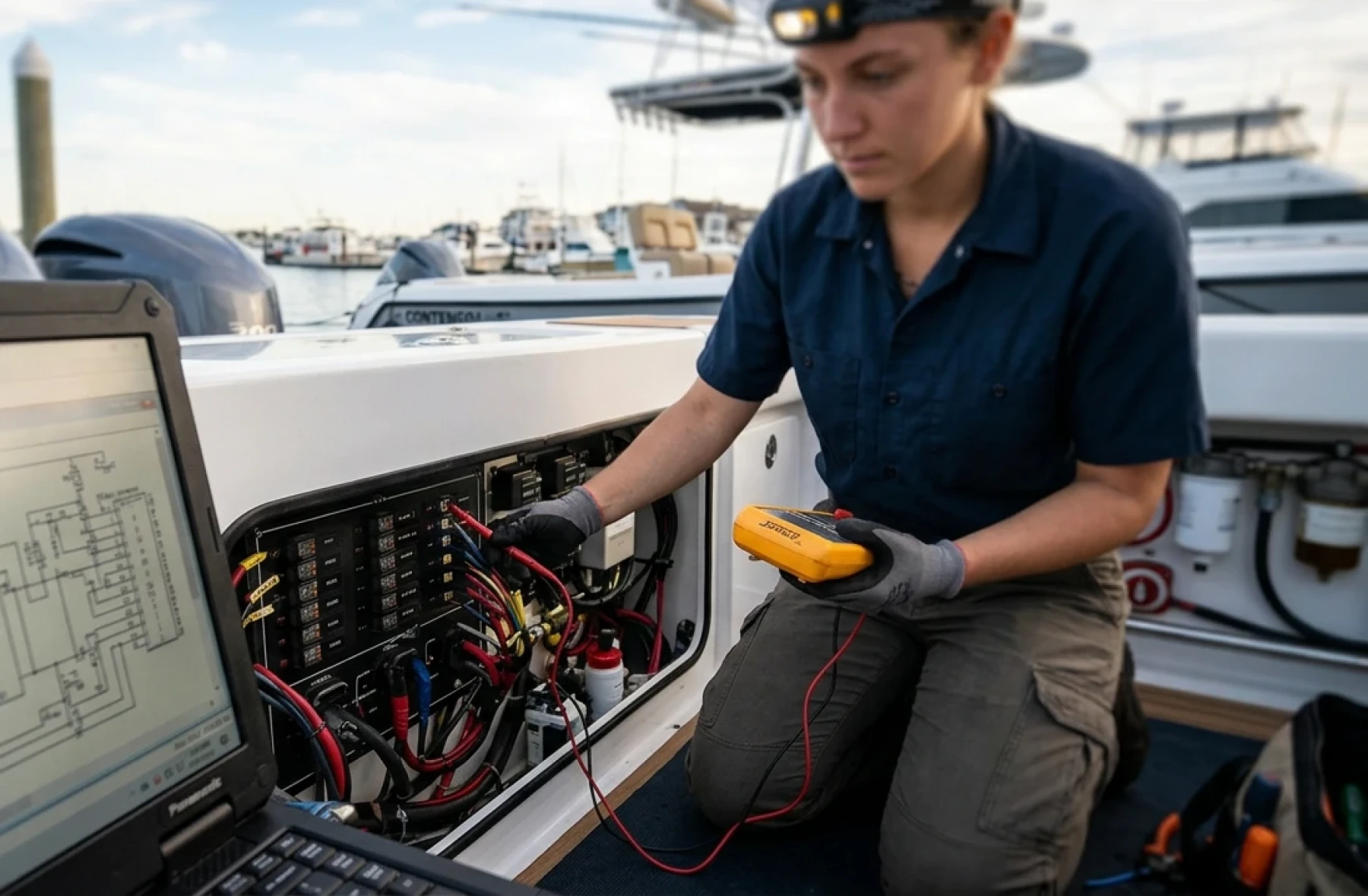
They may be able to see what the battery voltage was at the time, what electrical loads were operating, whether the engine or generator was running, whether there was a change in temperature, what was happening on the network and which alarms occurred immediately before the problem.
That does not mean the monitoring system diagnoses every fault automatically. What it does is give the engineer a much better starting point.
For service teams, that can reduce the time spent trying to reproduce intermittent problems. It can avoid unnecessary component changes and repeat visits. For the owner, it means less disruption and a far better support experience.
Historical data tells us more than what is happening today
The value of recorded information goes beyond diagnosing a single incident.
Over time, historical data can show us when the behaviour of a component is beginning to change, even though it is still operating.
Imagine a pump that would normally draw around four amps. Over a period of months, that gradually increases to four and a half, then five and eventually five and a half amps. Nothing has failed, so there may be no conventional alarm, but something is clearly different.
There could be increasing mechanical resistance. There could be a blockage. The pump might simply be getting closer to the end of its useful life.
The important point is not whether we immediately label that as predictive maintenance. The useful part is that an engineer now has information showing that normal operating behaviour has changed and can decide whether it warrants investigation.
That is a far more practical use of vessel data than collecting it simply because the equipment has the ability to do so.
Over time, more sophisticated analysis may make those trends even easier to identify. Pattern recognition and anomaly detection have obvious potential, and there may eventually be useful applications for AI in helping engineers and operators interrogate large amounts of vessel data.
But those technologies are not a substitute for getting the underlying monitoring architecture right. If the systems are fragmented, the data is poor or nobody has agreed what information matters, adding AI does not suddenly make the vessel intelligent.
The foundation still has to be good engineering.
Remote monitoring can change the service conversation
Better monitoring can also make a significant difference to remote technical support.
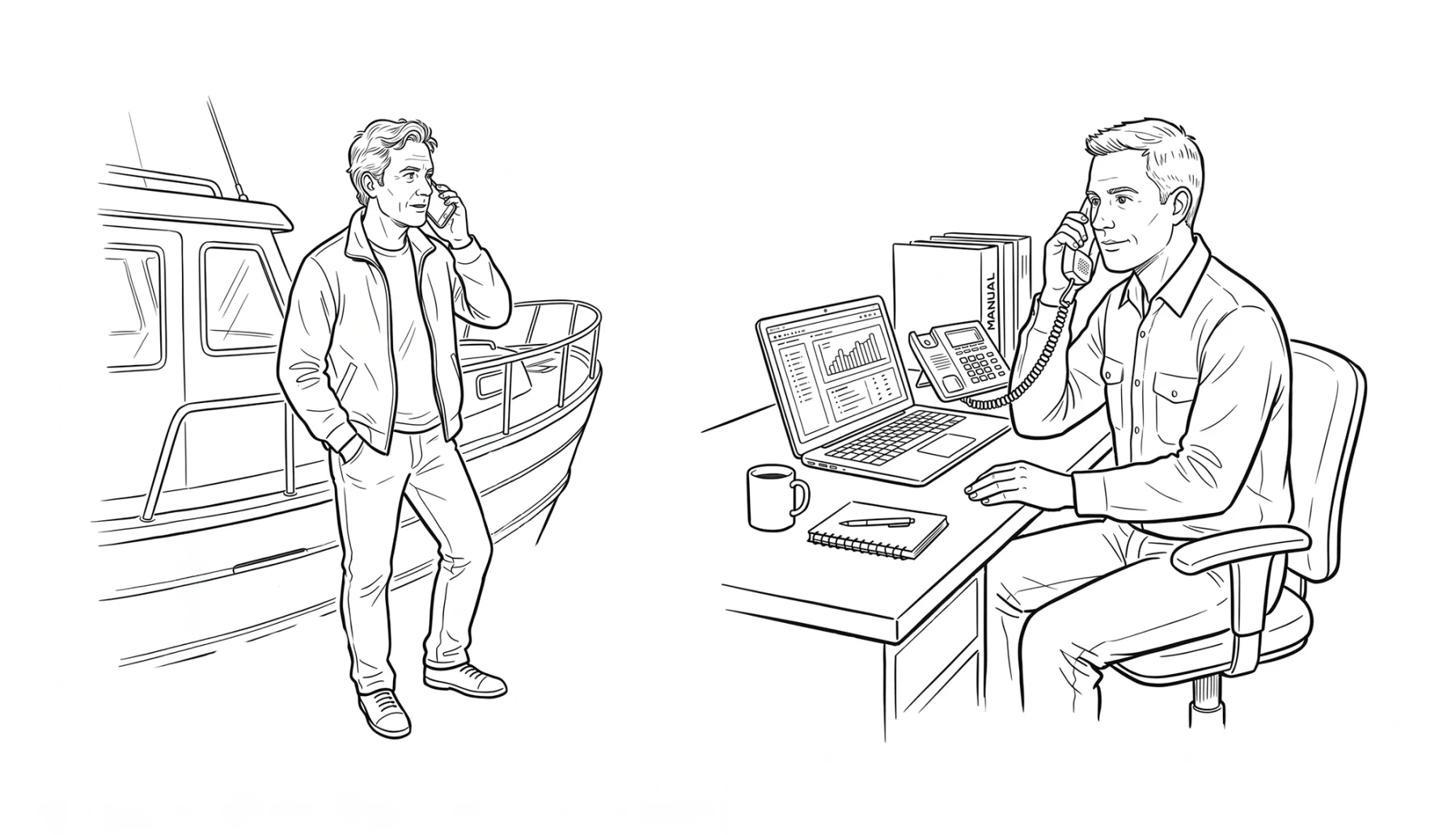
Today, an owner calling a boatbuilder, dealer or service engineer with an electrical problem may spend the first part of the conversation trying to establish what is happening onboard.
What voltage is showing? What percentage is on the battery? Is the charger running? Is shore power connected? Is there an alarm? Can somebody get to the vessel and check something?
Where remote monitoring has been designed into the vessel and the appropriate access is available, the engineer can potentially start with much of that information already in front of them. They can see the current state of the relevant systems, review historical events and begin narrowing down the problem before anybody travels to the boat.
Not every issue can or should be resolved remotely. There will always be situations where an engineer needs to inspect the equipment physically.
The value is in making that visit more informed.
If the engineer already knows what happened, when it happened and what the surrounding systems were doing at the time, they arrive with a much better idea of where to start.
For the service organisation, that can reduce unnecessary call-outs and make engineering time more productive. For the owner, it reduces the frustrating process of explaining a complex problem over the phone and hoping it happens again while the engineer is onboard.
Boatbuilders have to manage increasing complexity without passing it on to the owner
The same issue looks slightly different from the boatbuilder's perspective.
Vessels are becoming more electrically sophisticated. Lithium batteries, larger inverter systems, solar, hybrid propulsion, digital switching and networked electronics are all increasing what the electrical system can do.
Owners expect those systems to work together.
What they generally do not want is to become experts in how they work together.
That leaves the boatbuilder with an interesting challenge. The engineering behind the vessel is becoming more complex at exactly the same time that the customer expects operation to become simpler.
Good monitoring and control can help bridge that gap.
Rather than presenting the owner with a collection of individual products, each with its own display and way of working, the objective should be to present the vessel as one integrated system wherever that is practical.
That requires thinking about monitoring early enough in the project.
Which information does the operator genuinely need to see? Which alarms matter and what response is expected? Which systems need to exchange information? Who is responsible for confirming that those interfaces work? What needs to be available for commissioning and future support?
Those are system design questions, not simply display-selection questions.
The earlier they are considered, the easier it is to avoid ending up with technically capable equipment that still produces a fragmented experience for the customer.
What does good vessel monitoring look like?
There will never be one monitoring architecture that suits every vessel. A commercial workboat, production motor yacht, superyacht and specialist vessel have very different requirements.
But the principles are remarkably consistent.
Good monitoring should bring relevant systems together where doing so genuinely helps the operator or engineer. It should add context rather than simply expose raw numbers. It should prioritise the information that matters while keeping deeper technical information available when it is needed. It should retain enough useful history to support diagnostics and maintenance. Where control is appropriate, the response should be engineered and agreed rather than added as a clever feature afterwards.
Above all, the user experience should remain proportionate to the person using it.
A technically sophisticated vessel does not have to feel complicated.
The real value is confidence
The marine industry already has plenty of data and the amount available will continue to grow.
The opportunity is not to find more of it. It is to make better use of what we already have.
For owners, that means understanding whether the vessel is operating correctly without needing to understand every piece of engineering behind it.
For boatbuilders, it means integrating increasingly sophisticated power, monitoring and control systems without making the finished vessel more difficult to operate.
For service engineers, it means having useful information available when something goes wrong, rather than starting every diagnosis from scratch.
This is where smarter vessel monitoring earns its place. Not by adding another display or another set of numbers, but by making a complex vessel easier to understand, operate and support.
At Energy Solutions, we work with boatbuilders, marine electrical engineers and system integrators to design and support integrated power, monitoring and control systems for new-build and specialist marine projects.
If you are working through the monitoring and control requirements for a vessel, talk to our marine systems team about the project. If you are still at the planning stage, our Marine Systems Integration Checklist can also help you identify what has already been defined and what still needs resolving before specification and commissioning.
Frequently asked questions
What is a vessel monitoring system?
A vessel monitoring system brings together information from onboard equipment so an operator or engineer can understand the condition of relevant systems. Depending on the project, this can include power, batteries, engines, tanks, alarms, charging systems, generators and other connected equipment.
What is the difference between vessel monitoring and vessel control?
Monitoring shows what is happening. Control allows an operator or an appropriately configured system to change something. In an integrated system, the two may work together, but any automatic response should be deliberately engineered and agreed for the application.
Can NMEA 2000 data be used for vessel monitoring?
Yes. NMEA 2000 allows compatible marine equipment to exchange information across a shared network. That data can form part of a wider monitoring system alongside information from other networks and equipment.
Can vessel monitoring help with fault diagnosis?
Yes, particularly where relevant historical information is recorded. Engineers can review conditions before and during a reported problem rather than relying entirely on what is happening when they arrive at the vessel.
Does smarter vessel monitoring mean replacing existing equipment?
Not necessarily. In many projects, the opportunity is to make better use of information from equipment already installed. The right approach depends on the existing architecture, available interfaces and what the project needs the monitoring system to achieve.

Energy Solutions designs, builds and supports intelligent energy systems for marine, land and off-grid applications. Our marine team works with boatbuilders, system integrators and technical project teams on power, monitoring, control and bespoke electrical systems, with UK-based engineering support from concept through commissioning and beyond.
Sign up to our mailing list
Keep up to date with the latest news and offers.

|
Thank you for Signing Up |


Submitting your details indicates that you have read and agree to our privacy policy and cookie policy. You can unsubscribe from our emails by using the link at the bottom of all emails we send.