Blog:
50 Hz vs 60 Hz: Electrical frequency standards around the world
If you are working with electrical systems across different regions, voltage is only part of the picture. Frequency matters just as much and – unlike voltage – it is not harmonised globally.

What does ‘frequency’ actually mean?
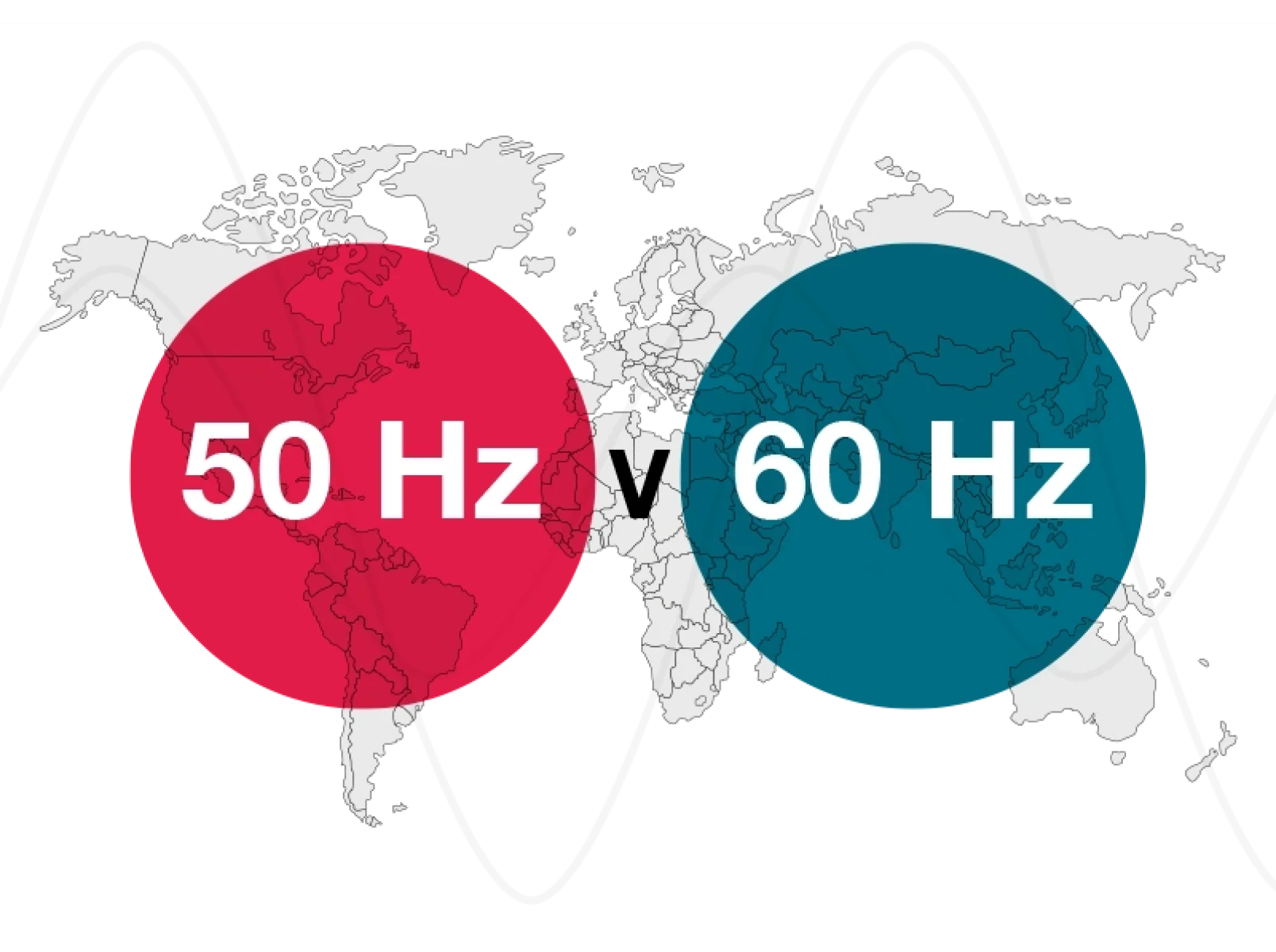
There are two main electrical frequency standards used worldwide 50 Hz and 60 Hz. Almost every country operates on one of these two frequencies, and they are not directly interchangeable for all equipment.
Electrical frequency refers to how many times per second the current alternates direction.
- 50 Hz = 50 cycles per second.
- 60 Hz = 60 cycles per second.
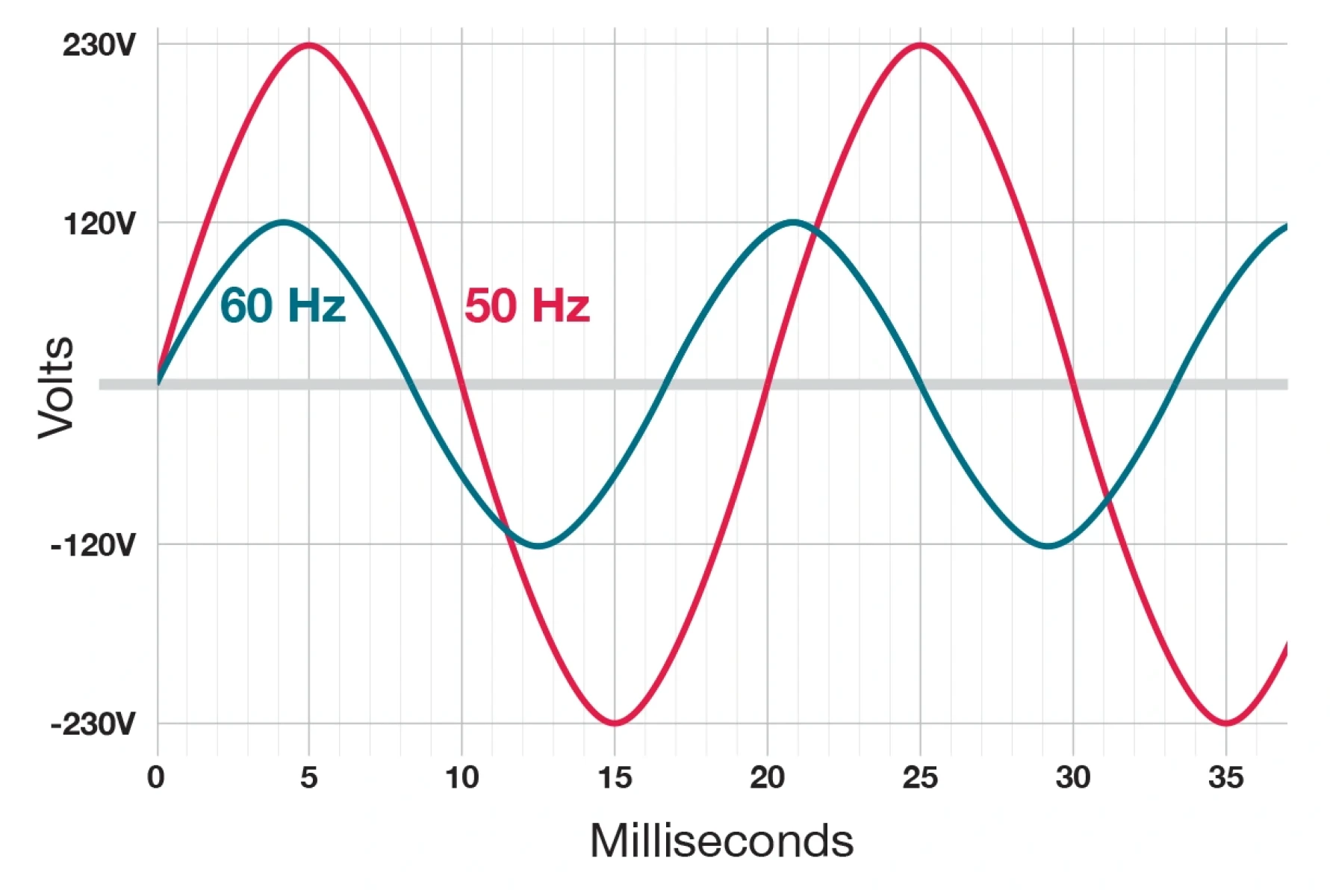
This affects how electrical equipment behaves, particularly anything that relies on timing or rotation.
Which countries use 50 Hz
Most of the world operates on 50 Hz. This includes the UK, all of Europe, most of Asia, Africa, Australia and New Zealand.
50 Hz is the standard across the majority of international electrical systems.
Which countries use 60 Hz
60 Hz is primarily used in the US, Canada, Mexico, parts of Central and South America and a small number of countries in Asia, including South Korea.
Japan is a notable exception and uses both frequencies. Eastern Japan uses 50 Hz while western Japan uses 60 Hz.
This dates back to early infrastructure development, where different regions imported equipment from different countries.
It remains one of the few places where both standards are actively used within the same country. You can read more about this here.
Why frequency differences matter
Unlike voltage, frequency cannot be adjusted easily. If a system is designed for 50 Hz, running it on 60 Hz can affect motor speed, equipment timing, heat generation and overall performance.
In some cases, equipment will still operate. In others, it will not function correctly or may be damaged over time. Frequency differences matter most for electric motors, pumps and compressors, timing devices and frequency-sensitive control systems.
For example, a motor designed for 50 Hz will run approximately 20% faster on a 60 Hz supply.
For motors, voltage and frequency must be matched (V/f ratio). Changing frequency without adjusting voltage can lead to overheating or reduced torque.
That may sound minor but it can have a significant impact on performance and lifespan.
Where problems typically occur
Issues usually arise when:
- Equipment is imported from a different region.
- Systems combine components from multiple countries.
- Marine or off-grid systems operate across international standards.
In these situations, frequency compatibility needs to be considered early in the design process.
Can you convert between 50 Hz and 60 Hz?
Yes, but not simply.
Frequency conversion requires specialised equipment such as frequency converters, inverter systems and generator-based solutions.
These add cost and complexity, which is why correct specification at the start is always the better approach.
Why this matters in real projects
In straightforward installations, frequency is rarely questioned. In integrated systems, it becomes critical.
Once you are working with multiple power sources, international equipment and hybrid or mobile systems, frequency compatibility becomes part of the overall system design.
At that point, it needs to be considered alongside voltage, load profile, and control systems.
Need support with system compatibility?
If you are working across international systems and want to ensure everything integrates correctly, it is worth addressing both voltage and frequency at the design stage.
Energy Solutions supports engineers, installers and system integrators with practical system design and specification.
50 Hz and 60 Hz Power Systems FAQs
What is the difference between 50 Hz and 60 Hz electricity?
The difference is the number of cycles per second of alternating current. 50 Hz means the current alternates 50 times per second, while 60 Hz alternates 60 times per second. This affects how certain electrical equipment, particularly motors and timing devices, operates.
Which countries use 50 Hz and which use 60 Hz?
Most of the world, including the UK, Europe, Asia, Africa, and Australia, uses 50 Hz. 60 Hz is used primarily in the United States, Canada, Mexico, and parts of Central and South America. Japan is a unique case and uses both frequencies in different regions.
Can 50 Hz equipment run on a 60 Hz power supply?
In some cases, yes, but it depends on the equipment. Devices like motors may run faster on 60 Hz, which can affect performance, efficiency and lifespan. Some equipment may not operate correctly at all.
What happens if you use 60 Hz equipment on a 50 Hz supply?
Equipment designed for 60 Hz may run slower on a 50 Hz supply. This can lead to reduced performance, overheating or increased wear, particularly in motors and mechanical systems.
Why does frequency matter in electrical systems?
Frequency affects how electrical equipment behaves, especially anything with moving parts or timing functions. Incorrect frequency can impact speed, efficiency and reliability.
How do you convert 50 Hz to 60 Hz?
Frequency conversion requires specialist equipment such as frequency converters or inverter-based systems. It is not a simple adjustment and needs to be considered as part of overall system design.
Is frequency the same across the UK and Europe?
Yes. Both the UK and Europe operate at 50 Hz, so there are no compatibility issues between them in terms of frequency.
When should frequency be considered in a project?
Frequency should be considered when working with international equipment, integrating systems from different regions, or designing marine, off-grid, or hybrid power systems.
Sign up to our mailing list
Keep up to date with the latest news and offers.

|
Thank you for Signing Up |


Submitting your details indicates that you have read and agree to our privacy policy and cookie policy. You can unsubscribe from our emails by using the link at the bottom of all emails we send.