Blog:
AWG to mm² cable conversion: What it means and why it matters
If you’re specifying or installing electrical systems, cable sizing is not an area where guesswork is going to cut it.
And as soon as you start working across international equipment, things become even less straightforward. Some specifications use AWG. Others use mm².
They both describe cable size. They just do it differently.

The challenge: two systems, one requirement
Cable size directly impacts how a system performs. It influences current carrying capacity, voltage drop, efficiency and reliability.
AWG, or American Wire Gauge, is used primarily in the United States.
mm², or square millimetres, is the standard across the UK and Europe.
They do not align neatly, which makes direct comparison difficult without a reference.
What a conversion table actually does
An AWG to mm² conversion table gives you a clear point of comparison between the two systems. It allows you to quickly answer questions such as:
- What is the metric equivalent of 12 AWG cable?
- What AWG size matches a 6 mm² specification?
It removes uncertainty when working between different standards.
The key thing to understand here is that we are dealing with systems that behave differently.
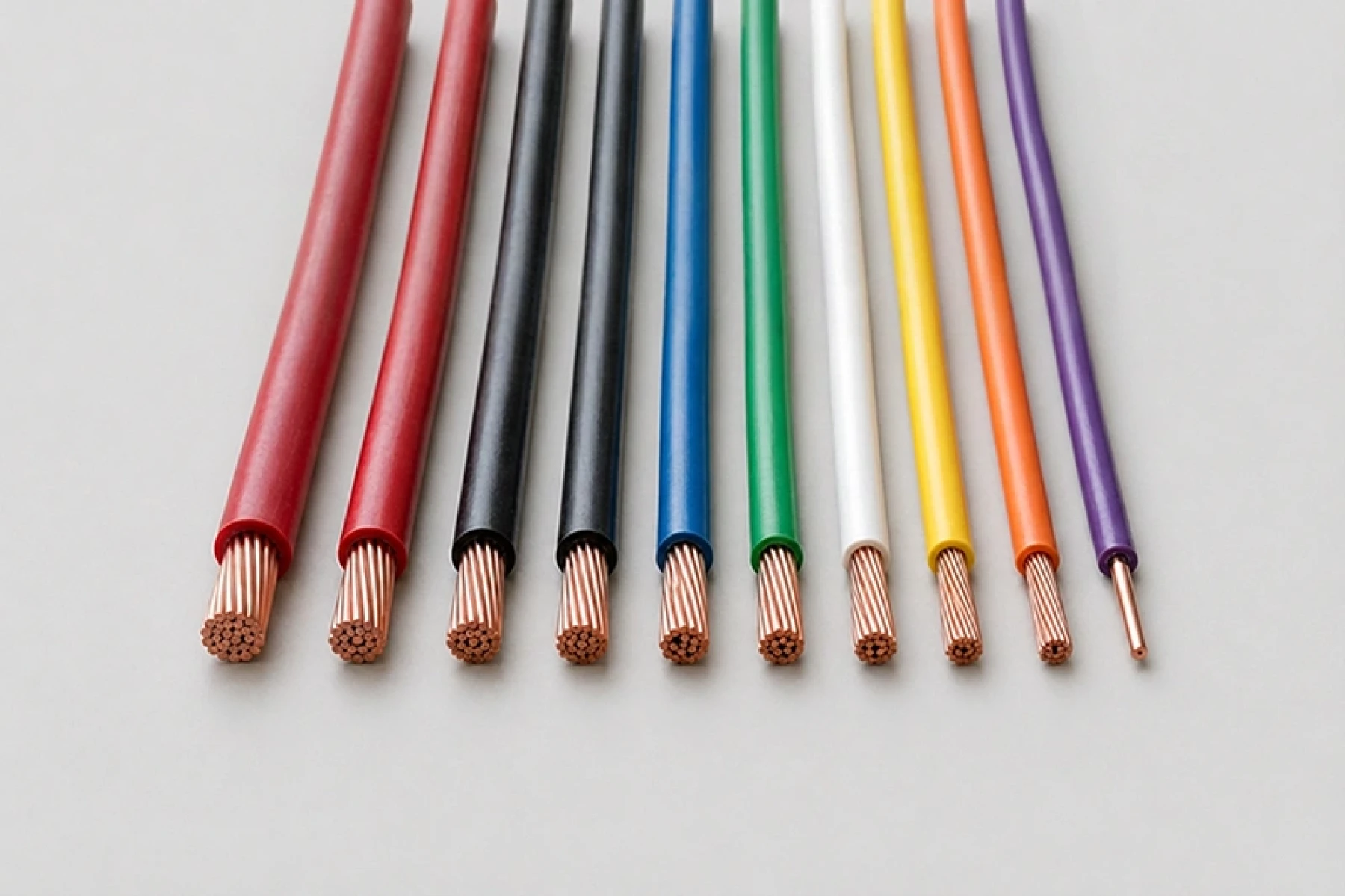
AWG works in reverse. A lower number means a thicker cable. mm² increases in line with size. A higher number means a thicker cable.
So 10 AWG is thicker than 14 AWG and 6 mm² is thicker than 2.5 mm²
This reversal is where most mistakes happen.
| AWG | Actual mm² | Common metric equivalent used |
|---|---|---|
| 14 | 2.08 mm² | 2.5 mm² |
| 12 | 3.31 mm² | 4 mm² |
| 10 | 5.26 mm² | 6 mm² |
| 8 | 8.37 mm² | 10 mm² |
| 6 | 13.3 mm² | 16 mm² |
These values are approximate but suitable for most specification and comparison work. For critical applications, always check manufacturer data. As a general rule, when converting between systems, it is good practice to size up to the next standard cable size rather than match exactly.
Why this matters
Cable sizing is more than just a technical detail, it has a direct impact on system performance.
Incorrect sizing can lead to overheating and safety issues, poor efficiency due to voltage drop, reduced system reliability and difficulties in fault finding once installed.
This becomes more important in integrated systems, where multiple components need to work together without compromise.
You are most likely to need AWG to mm² conversion when:
- Working with US-manufactured equipment.
- Reviewing mixed international specifications.
- Designing marine electrical systems.
- Building off-grid or hybrid power systems.
- Integrating batteries, inverters, and distribution.
In these environments, consistency matters. A conversion table helps maintain it.
Getting it right from the start
A conversion table is a simple tool but it prevents avoidable mistakes. It ensures the cable you select is suitable for the system you are building, it supports safe, efficient operation and it removes ambiguity when working across different standards.
If you are working across different standards or integrating multiple components, it is worth getting the specification right early.
Energy Solutions supports engineers, installers and integrators with practical advice and system design guidance.
To learn more about the work we do, get in touch today.
Need help with cable specification for your project? Check out our Custom Cable service to meet the requirements of your system.
Frequently Asked Questions
What is the difference between AWG and mm²?
AWG (American Wire Gauge) and mm² both measure cable size but they use different systems. AWG is a numbered scale where lower numbers indicate thicker cables, while mm² measures the actual cross-sectional area, where higher numbers indicate thicker cables.
Can you directly convert AWG to mm²?
While a mathematical formula exists to relate AWG to conductor size, it is not practical for everyday use. In practice, standard conversion tables are used because the two systems do not align to common cable sizes.
What AWG is equivalent to 2.5 mm²?
2.5 mm² is approximately equivalent to 13 AWG (non-standard size). In practice, if you are looking for an AWG equivalent for a metric cable, you should use 12 AWG for high-current applications (like power sockets) and 14 AWG for lighter loads or signal cables where cost and flexibility are prioritized.
Why does cable size matter in electrical systems?
Cable size affects how much current a cable can carry, as well as system efficiency and safety. Incorrect sizing can lead to overheating, voltage drop and reduced performance.
Where is AWG commonly used?
AWG is primarily used in the United States and in equipment manufactured to US standards. It is often found in marine, automotive, and off-grid systems that use internationally sourced components.
When should I use a conversion table?
You should use a conversion table whenever you are working with mixed specifications, particularly when integrating components from different regions or manufacturers.
Sign up to our mailing list
Keep up to date with the latest news and offers.

|
Thank you for Signing Up |


Submitting your details indicates that you have read and agree to our privacy policy and cookie policy. You can unsubscribe from our emails by using the link at the bottom of all emails we send.